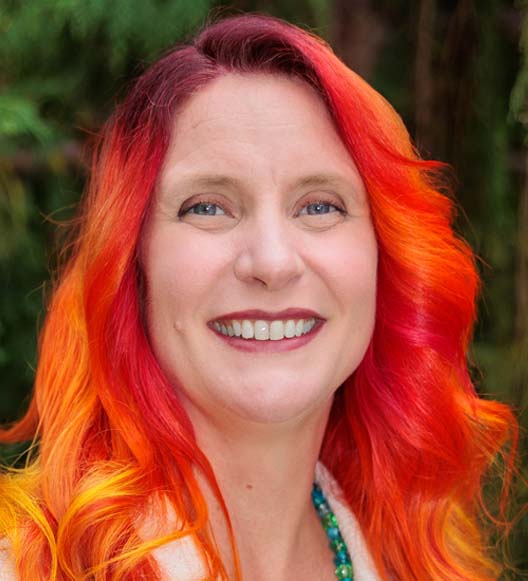
Jessica del Rosso, Registered Social Worker #834108 is a Registered Social Worker at MyLife Counselling in Guelph. She works with adults and youth to support them with ADHD, Autism, Trauma, Self-Harm, Eco Anxiety. Learn more about Jessi here.
The Impact of Childhood Trauma on Trusting Other Humans
What is an Epistemic Trust?
I recently attended a conference in Montreal that focused on childhood trauma. There were several takeaways – however, the primary guest speaker really stood out to me. He spoke about childhood trauma and the impact on what is called the Epistemic Trust. Simply put, epistemic trust refers to the transfer of knowledge between generations. It shows up being open to current information or perspectives and having that new knowledge informs us of our perception of the world, people around us and ourselves.
The speaker shared that when children grow up in child abuse or an unsafe environment, they develop a skewed relationship with epistemic trust. This is because their caregivers were unsafe and/or unreliable. Usually, one or two things can happen. The child too trusts information – because they have learned to agree with everything the caregiver says and not to think critically out of fear. Or they become extremely skeptical of current information or perspectives – making them very rigid in their opinions and becoming isolated socially due to this.
Isolation is a risk for someone who has not developed epistemic trust for a few reasons. For one, isolation becomes a risk because children who are abused tend to struggle with understanding healthy social cues and social connections to begin with. This can lead to the child being treated as the “odd one out” or holding secrets about what is going on at home and therefore never ever feeling fully vulnerable or emotionally connected to others. Therefore, I feel isolated. Secondly, they can become individuals who are at a higher risk of being taken advantage of by others who have the intention to do so. Think of cult leaders, religious influencers, MLM recruiters, or abusive partners. Why? Because even if someone grows up to be skeptical of others – they are still human. If they feel isolated, they will be susceptible to individuals who are charismatic and make them feel seen and understood. Once they are involved with these sorts of groups or people, one of the tactics used to further control them is isolation.
The speaker also touched on how epistemic trust has shifted over the generations for everyone, despite whether they come from an abusive childhood. In general, with the rise of social media, corporations controlling our news and the recent boom of AI, we are struggling as a collective species to know what is even “true” anymore. There is a growing sense of both isolation AND mistrust in others that has led to society being more skeptical of current information and people who have outside perspectives or information. Those with childhood trauma are at a more significant disadvantage to work against.
Me Mode, You Mode, We Mode
Childhood trauma also impacts how we can hold both our experience and the experience of another together at the same time. The example given by the speaker was if two people were sitting across from each other at a table, with a mug placed between them, both people would understand that the mug looks different from their perspectives but agree that there is indeed a whole mug that exists. When children experience abuse, it is found that they become consumed by the “Me Mode” or “You Mode” and struggle to be able to achieve the “We Mode.” Being able to conceptualize the entire mug from different perspectives, is an example of Mentalizing.” It is the ability to hold the perspectives of others, acknowledge their differences, and collaborate on a coordinating perspective. A less formal way of explaining this would be that mentalizing is the ability to understand that people walk through the world differently than us and that this shapes our perspectives on any given experience.
“Me Mode” is when the person becomes consumed by their own experience and perspective of a situation. This may sound like, “No-one understands,” “There is no other explanation for why this happened,” “Everyone is against me,” “What I am feeling, makes it real.” These folks may become defensive if someone gently points out another viewpoint on the situation and personalizes it as an attack. These are the folks who tend to become isolated due to struggling with social cues, being too rigid about their beliefs, or are unable to have conversations with others who try to share their different experiences and perspectives with them.
With “You Mode,” the person becomes engrossed by the experience of the other person/s in the situation. They are overly worried about how they will be perceived, what the other person may think about them, and they tend to be very agreeable every time someone gives them current information. These are the folks who tend to be taken advantage of because they tend to be overly flexible in their opinions and perspectives. They tend to struggle with a concrete value system or sense of self.
Getting stuck in either of these opposite ends of the spectrum, impact getting to the “We Mode” because “Epistemic Trust” is unable to be accessed. We Mode is the collaborative space in which we can hold our values, beliefs, and perspectives, while also recognizing that the other humans have their own values, beliefs, and perspectives. Being either stuck in “Me Mode” or “You Mode,” does not allow us to critically think, evaluate and be open to current information, learning and social development – which can lead to isolation.
As a personal example, I was recently very frustrated with my sister and brother-in-law for getting the date for a cottage booking wrong. My brain went right into the “Me Mode.” My brain shot right to “I try so hard to keep my schedule straight. Scheduling is so hard for me, and no one cares. Now I must rearrange everything because they made a mistake.” I went to my two partners with this frustration and noticed that even though they validated my feelings, they did not seem to validate the intensity of dysregulation I was feeling. I was picking up that the intensity of my emotion was out of proportion to the situation. So, I paused. The next morning, when I was regulated, my brain was able to get to the “You Mode,” where I could recognize that my sister and brother-in-law, have their own life and their own stressors and that mistakes happen. I was then able to get to the “We Mode” by recognizing that I could be frustrated about the date mix up AND recognize that it did not mean no-one cared about how hard I work to keep my shit together.
Great, So Now What?
So, what do we do with this information if we are someone who comes from childhood abuse? I have to say that attending the trauma conference, although extremely informative, was also depressing and overwhelming to process at times. The stats for trauma abuse survivors are stark when it comes to general risk factors, relationships, and attachment. If you are someone who comes from a history of child abuse, I know that it can be exhausting to always be working on yourself. Sometimes, we can do too much work on ourselves and never feel like we can take a break and just exist. I believe that knowing why we struggle with certain things can be enough work. However, if something is impacting your relationships and/or daily life negatively, then those are the areas you may choose to focus on.
For those who struggle with being stuck in the “Me Mode,” noticing when your narrative becomes stuck on your experience can be a helpful place to start. If you notice this happening, try to pause the narrative and tune into your level of dysregulation. It is not that your experience is not valid or even true – however, pausing to make sure you are thinking critically about a situation and thinking about it from different perspectives helps to make more grounded decisions. You can also ask people you love and trust to gently point out if they see a perspective on a situation other than your own. This challenges the part of our brain that immediately only focuses on our experience and helps develop by seeing things from other perspectives and allowing for more flexible thinking. You can ask yourself questions such as: “What would make someone behave that way?” “What other things may be going on for that person?” “What are three other possibilities that may have led to this issue?” To help train the muscles of holding different perspectives at the same time issue? those who struggle with being pulled into “You Mode,” it is important to also notice your dysregulation level and to pause if you find yourself immediately wavering in your thoughts on a situation. Once you are regulated and feel more grounded, how would you respond to the situation if a friend confided in you? What do you want to do if you were honest with yourself? What would it look like to limit the number of people you ask for the opinions of before you decide? Are there small and minimal risk ways you can put your needs first and communicate what you think and/or want? Such as – being honest about what you want for dinner, even if the other person often makes the decision.
For those of us who struggle to trust others and society at large, the good news is that accessing both Epistemic Trust and “We Mode” are skills that can be developed. It is not that trauma survivors can NEVER achieve mentalization – it is that mentalization becomes limited when we are dysregulated. We can develop tools to practice holding the perspective of others, while not losing our own perspective by working with a trauma therapist or reading more about the topic of mentalization and trauma.
Jessica del Rosso, Registered Social Worker #834108 is a Registered Social Worker at MyLife Counselling in Guelph. She works with adults and youth to support them with ADHD, Autism, Trauma, Self-Harm, Eco Anxiety. Learn more about Jessi here.