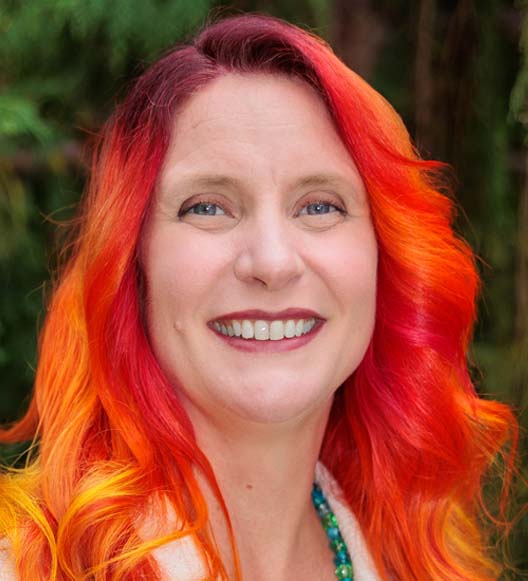
Rachel Niecke, RP (Q) #17825 is a Registered Psychotherapist (Qualifying) at MyLife Counselling in Guelph. She works with youth and adults through Social Anxiety, Performance Anxiety, Relationship Anxiety, Cannabis & Alcohol Use, Perfectionism, Low Self-Esteem, Ruminating Thoughts, Sexual Trauma, Career Transition, Meaning & Purpose, and Student Stress. Learn more about Rachel here.
Stuck in Cycles – Cannabis Use, Anxiety, and Depression
Cannabis and mental health are one of those topics that rarely fits into a neat little box. For some people, it feels like a lifesaver in the moment. For others, it slowly becomes something that keeps them stuck. And for many, it’s both at the same time. Let’s talk about the cycles that can develop between cannabis use, anxiety, and depression in a non-judgmental way which can really help us understand what’s going on under the surface.
The Anxiety Cycle: When Cannabis Becomes the Fire Extinguisher
If you’ve ever used cannabis to cope with anxiety, you’re not alone. Anxiety can feel intense, overwhelming, and hard to sit with. Of course you’d want relief. This is where the cognitive triangle from Cognitive Behavioural Therapy (CBT) comes in: our thoughts, feelings, and behaviours are all interconnected.
This cycle can often look something like:
- Thoughts: “What if I mess this up?” “They’re judging me.” “I can’t manage this.”
- Feelings: Anxiety, tension, restlessness
- Behaviour: Avoidance (like using cannabis to take the edge off)
And here’s the tricky part: cannabis might feel like it works in the short term. It can quiet the thoughts, soften the feelings, and give your nervous system a break. That’s the hook. Your brain goes, “Oh, this helped with my anxiety. Let’s do that again next time I feel anxious.” However, over time, this can create a reinforcing loop, sometimes creating dependency: Anxiety → Smoke → Relief → Repeat.
But let’s bring in an analogy here. Using cannabis for anxiety can be like putting out a fire with a fire extinguisher every time it flares up. It’s effective in the moment because the flames go down and things seemingly may feel more manageable. However, if we never figure out what’s starting the fire in the first place (e.g, unhelpful thought patterns, or unmet needs), we end up constantly running around putting out fires instead of stopping the fire from starting to begin with. And sometimes the fires start happening more often. This is where CBT skills can come in handy. Not necessarily to take away the extinguisher entirely, but to also start looking at:
- What thoughts are starting or exacerbating anxiety for me?
- Are there cognitive distortions (catastrophizing, mind-reading, all-or-nothing thinking) at play?
- What happens if I respond to those thoughts differently than the way I usually do?
Because when we only rely on cannabis, we don’t get the chance to build confidence in our ability to tolerate and work through anxiety. The brain never learns, “Hey, I can actually manage this on my own” and instead, reinforces the dependence on cannabis to get through those tough moments.
The Depression Cycle: When Motivation Takes a Hit
On another note, cannabis can also interact with depression in a different (but equally distressing) way. A big part of depression is low motivation, low energy, and withdrawal from activities. And one of the most evidence-based ways to support depression is something called behavioural activation; basically, doing things before you feel like doing them.
Because here’s the annoying truth: motivation often comes after action, not before it. For example, you don’t wait to feel motivated to go for a walk; you go for the walk, and then motivation (or at least a slight mood shift) might follow.
But cannabis can make this harder as it can:
- Reduce energy and drive.
- Make staying in feel more appealing than going out.
- Increase comfort while doing less.
So, the cycle can look like this:
Low mood → Smoke → Feel temporarily better/relaxed → Do less → Feel less accomplished/connected → Lower mood → Repeat.
It’s subtle at first. You might not even notice it happening. But over time, it can shrink your world a little bit (fewer activities, less movement, less connection); all of which are things that help depression and are integral for our psychosocial well-being. So, while cannabis might take the edge off emotionally in the moment, it can also make it harder to engage in the very behaviours that support mood overall.
The Shame Cycle: Getting Stuck in the Middle
There’s another layer that often shows up, and it’s one person who doesn’t talk about enough: shame.
It can sound like:
- “I said I wouldn’t smoke this much.”
- “Why can’t I just get it together?”
- “I’m wasting time / money / my potential.”
Cue shame, guilt, frustration. And then what happens? You might smoke to get away from those feelings.
So now the cycle looks like:
Use → Shame → More difficult emotions/lower mood → Use again to cope.
This one can feel particularly heavy because it’s not just anxiety or depression anymore; it’s also how you feel about yourself.
So, What Do We Do with This?
This doesn’t have to be quitting cannabis entirely (unless that is your goal). It’s about getting curious about your patterns.
A few gentle questions to start with:
- What do I feeling right before I use it?
- What am I hoping this will change for me right now?
- What happens after?
And then, slowly, experimenting with small shifts:
- Can I delay using by 10–15 minutes and try something else first?
- Can I challenge one anxious thought instead of immediately avoiding or acting on it?
- Can I do one small positive activity (even if I don’t feel like it) before smoking?
The idea here is to build more tools to help manage those tough moments rather than just taking one away without replacing it. Because cannabis use becomes part of a system that’s trying to cope, soothe, and manage real and aversive experiences. The goal is giving yourself more than one way to manage what shows up. And maybe, over time, you might find you need the fire extinguisher even just a little bit less.
If you’re reading this and seeing yourself in some of these cycles, it might be a sign to get curious about your own relationship with cannabis; not from a place of judgment, but from a place of understanding. If you’d like support with that, I’d be happy to collaborate with you. We can explore your specific patterns together, unpack what’s underneath and driving them, and build tools that feel more sustainable and aligned with what you need.
Rachel Niecke, RP (Q) #17825 is a Registered Psychotherapist (Qualifying) at MyLife Counselling in Guelph. She works with youth and adults through Social Anxiety, Performance Anxiety, Relationship Anxiety, Cannabis & Alcohol Use, Perfectionism, Low Self-Esteem, Ruminating Thoughts, Sexual Trauma, Career Transition, Meaning & Purpose, and Student Stress. Learn more about Rachel here.